
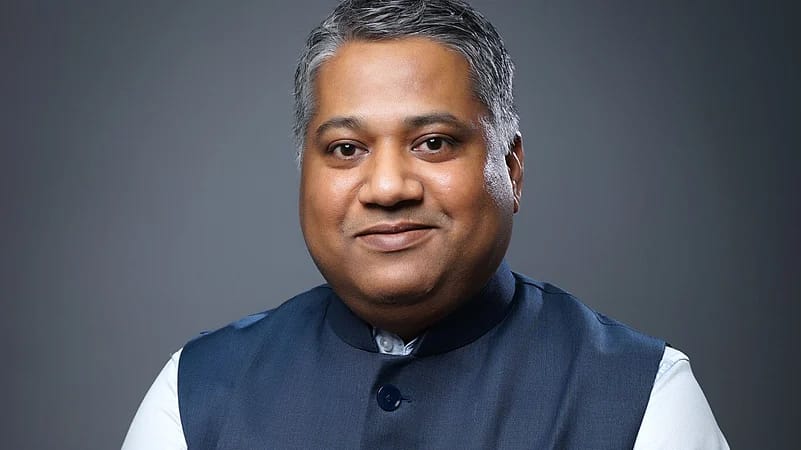
By Mr. Lokanath Panda, COO, BLS E-Services
Financial access in rural Rajasthan often depends less on account ownership and more on whether there is someone nearby who can actually help a person use it. In many villages, the bank account exists, but the nearest branch does not fit into daily life. This gap is where Customer Service Points (CSPs) operate.
A Customer Service Point functions as a local banking access point through the Business Correspondent (BC) network. It enables withdrawals, deposits, balance checks, Aadhaar-based authentication, and assisted digital transactions. For many households, it is the first practical interface with formal banking.
Where Banking Meets Daily Life
Financial inclusion in India has expanded sharply over the past decade. More than 550 million accounts have been opened under the Pradhan Mantri Jan Dhan Yojana (PMJDY) as of 2025–26. Direct Benefit Transfer (DBT) systems have moved over ₹34 lakh crore directly into beneficiary accounts.
These numbers describe access, not usage. The movement of money in rural Rajasthan still depends on physical access points that can complete transactions in real time. CSPs fill that gap by enabling cash withdrawal and deposit services close to where people live and work.
In several districts, CSPs function as the only operational banking touchpoint within reachable distance. That shapes how financial systems are actually used on the ground.
CSPs as the Working Layer of Banking
India has around 13 to 14 lakh Business Correspondents operating across rural and semi-urban regions. A large share of rural banking transactions flows through this network, with estimates suggesting that around 90 percent of rural access points depend on BC or CSP models.
CSPs handle a mix of services. Cash withdrawals through the Aadhaar Enabled Payment System (AePS), deposits, remittances, account servicing, and government-related transactions form the core workload. AePS alone processes more than ₹3 lakh crore annually, with a significant share routed through CSP infrastructure.
In Rajasthan, this model carries additional weight because physical bank branches are concentrated in towns, while villages are widely dispersed. CSPs reduce the distance between banking infrastructure and everyday financial activity.
Digital Systems and Assisted Usage
India’s payment system has moved heavily toward digital rails. Unified Payments Interface (UPI) recorded 241 billion transactions in FY 2025–26, with daily volumes crossing 600 million transactions. Digital payments account for more than 85 percent of total transaction volume in the country.
Even with this shift, rural usage depends on assisted access. CSPs support onboarding, biometric authentication, and transaction completion in environments where independent digital usage is still uneven. They also manage situations where connectivity or device failure interrupts digital flows.
The system is digital in design, but assisted in execution across large parts of rural India.
Trust Is Built Through Repetition
In rural settings, trust in financial services is shaped through repeated interaction rather than institutional messaging. CSP agents are usually known within their communities. That familiarity matters when people decide whether to withdraw money, transfer funds, or rely on digital systems.
DBT payments reaching households on a regular basis reinforce this interaction cycle. When funds arrive, CSPs often become the point where those funds are accessed. Over time, the service point becomes part of routine financial behavior rather than an external system.
Policy Scale Versus Delivery Reality
Programs like PMJDY and DBT create the financial backbone for inclusion. The structure is in place, but its effectiveness depends on whether transactions can be completed locally without friction.
Rajasthan shows this clearly. Large rural populations and long distances between settlements make branch banking difficult to access in practice. CSPs reduce that gap by providing operational banking functions within villages.
The Financial Inclusion Index for India stood at 67 in 2025, reflecting progress, but usage patterns across rural regions remain uneven. Account penetration has moved faster than consistent engagement.
Technology Sits Behind the Counter, Not in Front of It
Technology now supports most CSP operations, but it does not replace the human interface. Biometric authentication tools enable secure verification. AI-based monitoring systems flag transaction anomalies. Digital dashboards track service activity in real time.
These systems improve reliability, but the customer interaction still happens through the CSP agent. In many cases, the agent interprets system prompts, resolves errors, and guides users through transactions that are not fully intuitive.
The structure is digital. The execution is assisted.
Rajasthan as an Operating Environment
Rajasthan’s rural geography makes CSPs central to financial access. Villages are spread across large distances, and banking infrastructure is concentrated in semi-urban clusters. In this setting, CSPs function as the primary access layer for withdrawals, deposits, and government-linked payments.
For many households, interaction with formal finance is defined entirely by the CSP point rather than a bank branch.
What Determines Performance on the Ground
CSP effectiveness depends on a few practical factors.
Liquidity determines whether withdrawals can be processed without delay. Connectivity determines whether transactions go through without interruption. Agent reliability determines whether users return to the same point over time.
Where these elements hold together, CSPs function as stable financial access points. Where they do not, usage shifts back toward informal cash handling.
The Direction of Last-Mile Banking
India’s financial system is increasingly digital, but usage continues to depend on assisted infrastructure in rural regions. CSPs sit at that intersection. They connect formal banking systems with everyday financial behavior in villages and small towns.
As digital transactions grow, the workload at CSPs becomes more complex rather than less relevant. They are now part of both cash-based and digital-based financial flows.
Rural Rajasthan shows how financial inclusion operates in practice. Access is no longer the main question. Consistency of use is. CSPs remain central to bridging that gap between access and sustained usage, ensuring that the benefits of banking reach people where they live, work, and manage their everyday financial needs.