
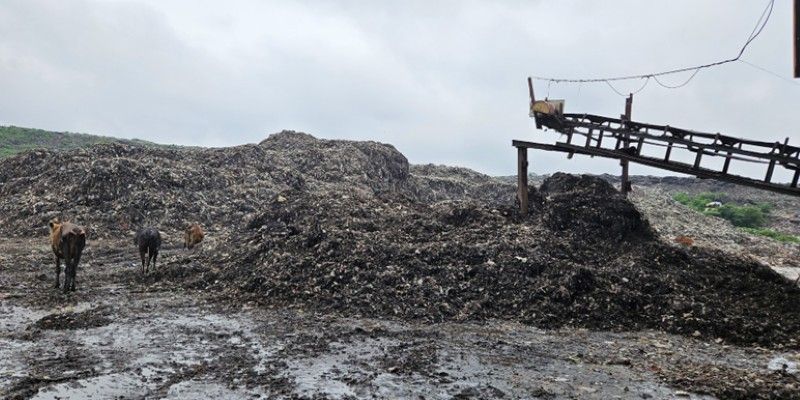
International research collaborations led by the University of Leeds are supporting India’s efforts to build cleaner cities, improve waste management systems and advance its net-zero targets through studies focused on municipal and agricultural waste.
Researchers from the University of Leeds, India, Hong Kong and the UK have co-authored two studies examining the environmental and public health impact of household and agricultural waste in India, while proposing policy and infrastructure interventions to support decarbonisation efforts.
One of the studies, published in the Journal of Industrial Ecology, warned that municipal solid waste generated in India’s urban areas could increase twelve-fold by 2050 if current consumption patterns continue.
The study highlighted that improper disposal, burning and poor segregation of household waste contribute significantly to air pollution, water contamination and the spread of infectious diseases in rapidly growing Indian cities.
Researchers recommended improved waste segregation at source, expansion of recycling and processing infrastructure and reduced dependence on landfills. They said such measures would support India’s target of achieving net zero emissions by 2070 and align with the recently adopted Solid Waste Management Rules, 2026.
The research involved experts from the University of Leeds, King’s College London, London School of Hygiene & Tropical Medicine, Indian Institute of Technology Kharagpur, CSIR-National Environmental Engineering Research Institute, Manipal Institute of Technology, Albokoes EnviroSustain Pvt Ltd and Hong Kong Baptist University.
Dr Daya Pandey, Assistant Professor in Energy Systems at the University of Leeds, said the composition of municipal waste in India had changed over time due to rising incomes and evolving consumption patterns.
“In the past, municipal solid waste in India was largely food waste. Today, it contains a higher proportion of dry solid waste such as packaging material,” Pandey said, adding that waste management systems must be locally adapted and policy-driven.
A second study, published in the journal Biomass and Bioenergy, examined how India could use agricultural residue to generate renewable energy and high-value products through technological innovation, policy reforms and circular bioeconomy approaches.
The study noted that the agricultural sector remains the second-largest contributor to India’s greenhouse gas emissions, with crop residue burning continuing to be a major source of pollution.
Researchers said sustainable residue management could help reduce emissions while supporting rural livelihoods and India’s transition towards a greener economy.
Dr Vinay Yadav of IIT Kharagpur said India’s waste challenge was linked not only to waste generation but also to public health, climate impact and urban liveability.
He said the crisis could be addressed through better infrastructure, stronger policies and adoption of circular economy practices focused on reducing, reusing and recycling waste.
The University of Leeds and IIT Kharagpur have an ongoing academic partnership under a Memorandum of Understanding signed in 2024 covering joint PhD supervision and research collaboration in engineering, transport studies and biological sciences.
The Leeds delegation, led by Vice-Chancellor and President Professor Shearer West, also visited New Delhi in 2025 to expand partnerships in medicine, engineering, biotechnology and social sciences as part of the university’s India-focused international strategy.