
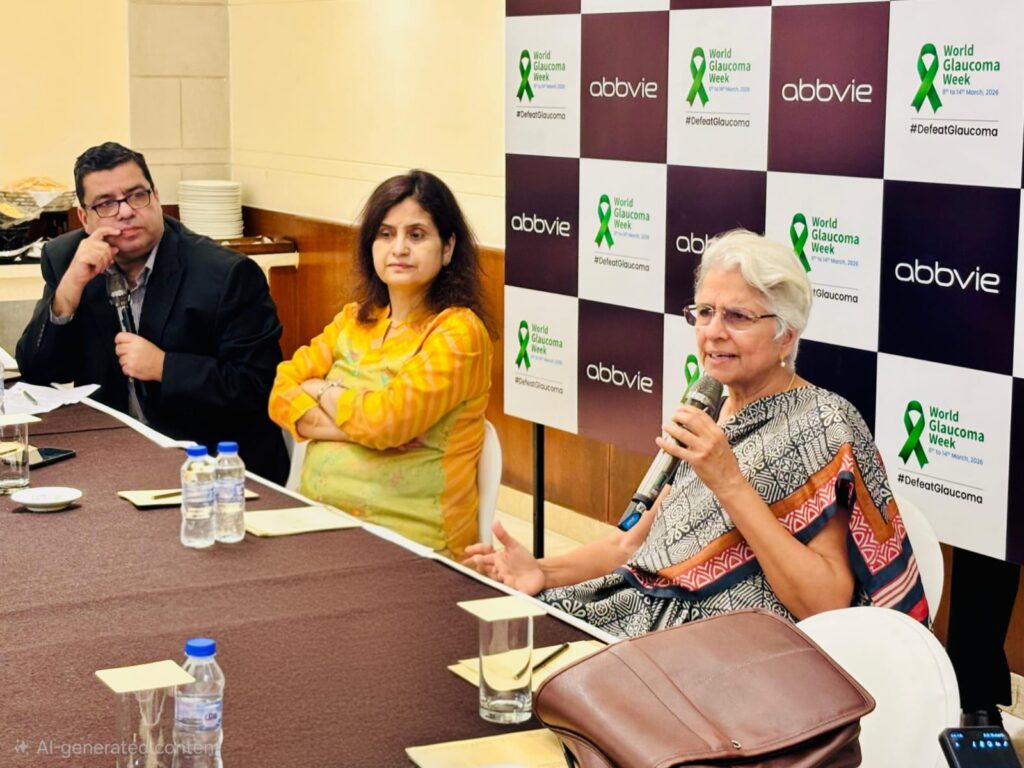
AbbVie hosted a national media conclave in the national capital during World Glaucoma Week to raise awareness about glaucoma, a leading cause of irreversible blindness, and highlight the need for early detection and regular eye screening.
The event, held at India Habitat Centre in New Delhi, brought together ophthalmologists and glaucoma specialists who emphasised the importance of timely diagnosis and regular eye check-ups to prevent vision loss caused by the disease.
According to experts, glaucoma affects an estimated 12 million people in India, making the country one of the most affected globally. Nearly 90 per cent of cases remain undiagnosed as the disease often progresses without noticeable symptoms in its early stages.
Suresh Pattathil, Managing Director and General Manager, AbbVie India, said glaucoma is often referred to as the “silent thief of sight” because many patients remain unaware of the disease until significant vision loss has already occurred. He said the company is working to strengthen awareness around early detection and encourage regular eye examinations.
The conclave featured a panel discussion with glaucoma specialists including Dr Suneeta Dubey of Dr. Shroff’s Charity Eye Hospital, Dr Harsh Kumar of Centre for Sight, and Dr Ramanjit Sihota of Shroff Eye Centre. The session was moderated by Dr Deven Tuli of Netram Eye Foundation.
Experts highlighted that routine eye examinations after the age of 40, including optic nerve evaluation and intraocular pressure measurement, can help detect glaucoma early. They also stressed the importance of patient awareness, long-term monitoring and adherence to treatment to manage the condition.
The event also featured a “Glaucoma Vision Experience” demonstration that allowed attendees to simulate the visual limitations experienced by people living with glaucoma, highlighting how the disease gradually affects peripheral vision.
Glaucoma is a chronic eye condition that damages the optic nerve, often due to increased intraocular pressure. While the disease cannot be cured, early diagnosis and appropriate treatment can slow its progression and help patients preserve their vision.