
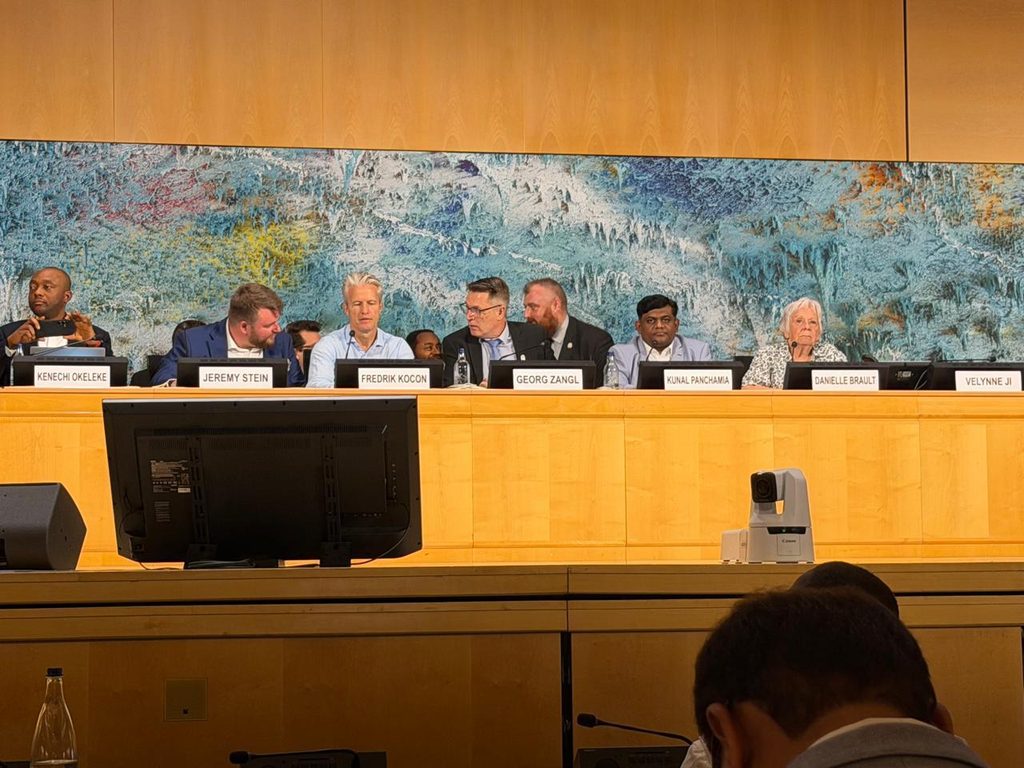
Indian cybersecurity entrepreneur and ePROTECT360 Founder and CEO Kunal Panchamia called for greater collaboration among developing countries in building and adopting artificial intelligence technologies at the AI for Developing Countries Forum (AIFOD) Geneva Summit 2026.
Panchamia participated in a session titled “Should Small Nations Build, Buy or Share AI?” held from August 12 to 14 at the United Nations Office at Geneva. The discussion examined how smaller and developing countries can approach AI infrastructure, models and technologies while balancing factors such as cost, security, technological dependence and long-term competitiveness.
Panchamia argued that developing nations may not have the financial resources, computing infrastructure, skilled workforce or technological capacity to independently develop every component of an AI ecosystem. He suggested that countries could identify their existing strengths and collaborate with trusted partners to access capabilities that may not be available domestically.
“The question should not always be who owns the technology. We should also ask how we can bring together what each country already has and use those capabilities collectively for the benefit of society,” Panchamia said.
The discussion also addressed the relationship between AI sovereignty and technological independence. According to the session’s published analysis, countries could assess their existing infrastructure, skills and dependencies before deciding which capabilities should be developed domestically, procured externally or shared through partnerships.
Panchamia also highlighted cybersecurity and digital resilience as important considerations as governments and critical infrastructure increasingly adopt AI. He said AI deployment should take into account security, data readiness and resilience from the outset.
The AIFOD Geneva Summit brought together participants to discuss the role of developing countries and emerging ecosystems in shaping AI development. Its central theme was “Small Takes the Lead: The Future Belongs to the Many, Not the Few.”