
Attributed to Mr. Lokanath Panda, COO, BLS E-Services Ltd.
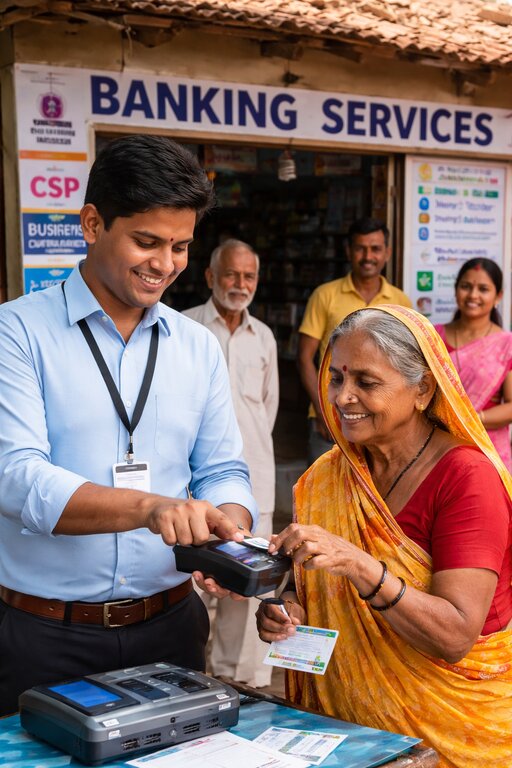
The Business Correspondent (BC) network has become a backbone for Financial Inclusion (FI) in the country since it was introduced nearly two decades ago. The BC model was designed to bridge the gap between formal banking services and underserved populations, particularly in rural areas. Challenges such as physical distance and linguistic barriers have historically restricted access to organised finance for many communities. The BC network addresses these gaps by offering ease of service at the doorstep, bringing financial services directly to rural populations.
Despite its critical role, the BC model is under strain due to several challenges. Commission rates have remained stagnant despite inflation and rising operational costs, impacting the commercial viability of BC agents. At the same time, with other sectors like e-commerce opening up, there is increasing churn in the channel.
The BC model provides essential banking services at customers’ doorsteps and helps banks significantly reduce branch operating costs while servicing large sections of the population. Banks need to further incentivise BCs and provide them with more earning opportunities to ensure their long-term participation in the Financial Inclusion ecosystem.
We expect that the Honourable Finance Minister, Smt. Nirmala Sitharaman, in the upcoming Union Budget, will address issues related to the BC channel, including diversification of their income streams through a wider bouquet of services. Another key focus area should be addressing the liquidity challenges faced by BCs.
The National Strategy for Financial Inclusion 2025–30, a vision document by the RBI, also recommends expanding the Payment Infrastructure Fund, with its usage extended to support Business Correspondents (BCs) and Customer Service Points (CSPs). BCs and CSPs bear recurring costs to upgrade outlet infrastructure (such as GPS devices, L1 biometrics, CCTV, and counterfeit currency note detectors) to comply with evolving RBI, UIDAI, and bank guidelines.
Targeted incentives for BCs conducting financial literacy camps, social security scheme enrolment drives, and Re-KYC camps may also be introduced. BCs and CSPs invest significant time and resources in customer mobilisation and promotional activities for these government, RBI, and bank priority initiatives.
There is also a need to enable BCs as Digital Loan Partners by authorising them to digitally source, service, and recover small-ticket loans. Banks’ high operational costs often hinder the availability of small credit. Leveraging BCs’ local presence offers a more accessible and cost-effective solution for managing the entire lifecycle of microloans.
Bank CSR funds can be utilised for skilling by directing Corporate Social Responsibility resources toward training and certifying BCs and CSPs. BCs undertake considerable effort and expense in training and upskilling their CSP networks. Additionally, support is needed for essential CSP welfare measures, including cash-in-transit insurance, health cover, and life insurance.
We anticipate that this Union Budget will pave the way for the long-term sustainability of BC services by addressing systemic challenges and creating an equitable operational model. Enhanced training and capacity building will be crucial, especially in value-added services such as selling financial products like insurance and mutual funds to diversify income streams. Soft skills training, particularly in customer-centric approaches, is equally important.